The General Scheme of the Bill includes proposals to:
- Increase the qualifying periods of reckonable residence from 5 to 8 years for most applicants;
- Introduce language tests in English, Irish or Irish Sign Language, and an Irish civics, society and politics test; and
- Ensure applicants for citizenship by naturalisation are self-sufficient.
09 September 2026
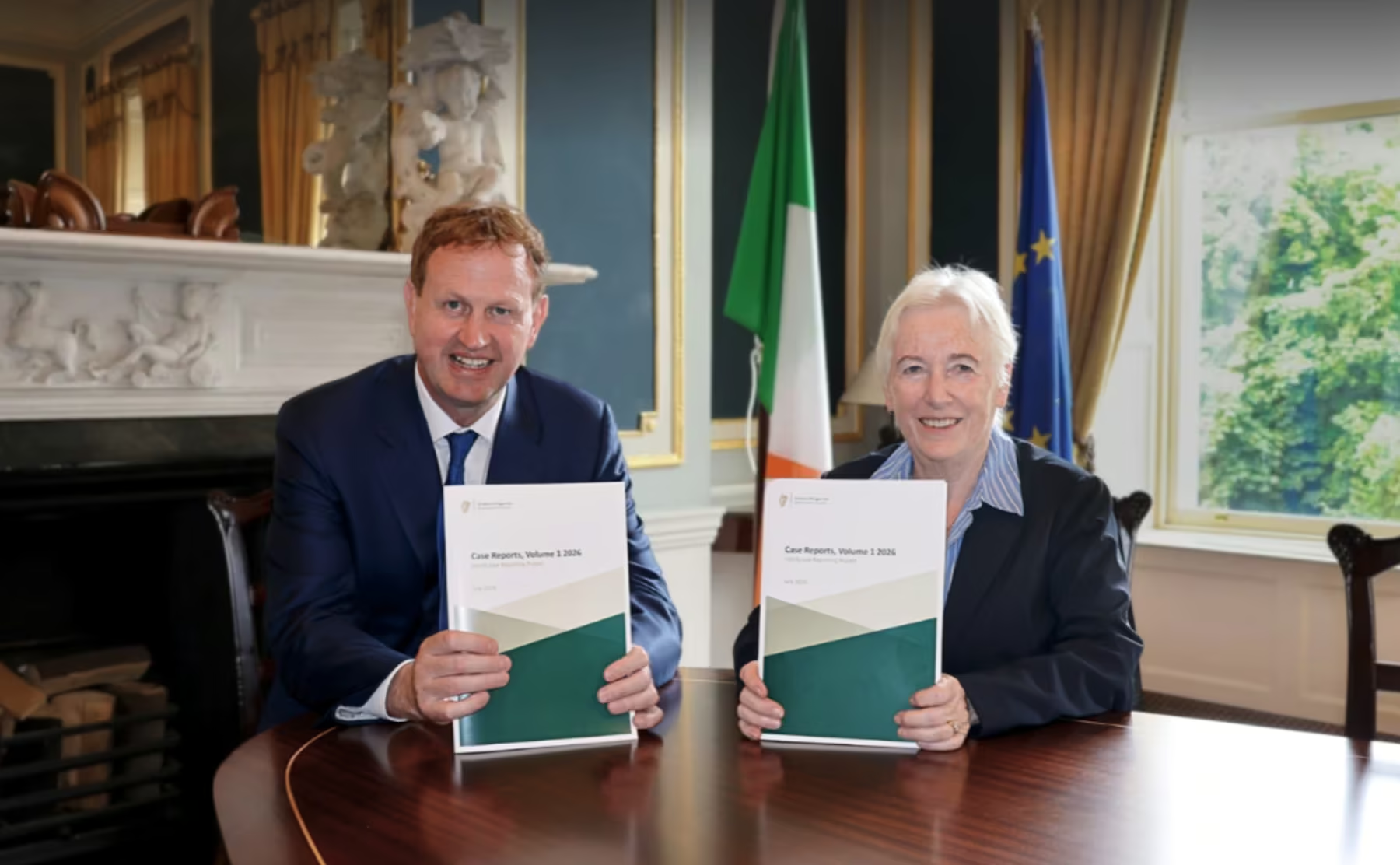
The Minister for Justice, Home Affairs and Migration, Jim O’Callaghan and Minister of State for Migration Colm Brophy today secured Government approval for the priority drafting of legislation that will ensure Ireland’s naturalisation legislation is strengthened and aligned with that of other European countries.
The 2025 Programme for Government contains a commitment to continue to implement a firmer migration system that, amongst other things, protects the integrity of our immigration framework. The importance of having a robust, rules-based system for migration and asylum, to ensure social cohesion and mitigate any negative economic impacts, has also been underlined by the Government in several public statements and measures to date.
The suite of amendments contained in the General Scheme reflects the Government’s policy that Irish citizenship by naturalisation is an earned privilege and the culmination of sustained lawful residence, economic self-sufficiency, social integration, civic participation and compliance with immigration law, rather than merely the passage of time.
Announcing Cabinet approval Minister Jim O’Callaghan said:
“At the outset, I want to be clear in saying that Ireland values the contribution migrants make to our economy, communities and public services. The proposed reforms are balanced, proportionate and necessary.
“The measures concern the requirements for naturalisation and should not be interpreted as a judgment on the contribution of migrants. They seek to ensure that citizenship reflects a demonstrated, durable connection to Ireland, knowledge of the State and its institutions, and a sustained commitment to participation in Irish society.
“I have a responsibility to manage migration in the interests of the economic and social wellbeing of the country and to promote independence and self-sufficiency to support positive integration. Ireland will continue to welcome those who choose to build their lives here and contribute to Irish society. The proposals do not seek to restrict integration or exclude migrants from Irish society.
“The draft legislation will simultaneously strengthen the integrity of the naturalisation system and align Ireland more closely with processes in several other EU Member States. In that regard, any comparisons should consider the entire framework, including residence duration, language and civic knowledge requirements.”
Minister of State for Migration, Colm Brophy said:
“Irish citizenship is among the most valuable legal statuses the State can confer. It is a privilege, not a right. It creates an enduring bond between an individual and the State.
“I believe that citizenship should reflect full participation in our society and that basic proficiency in one of our national languages enables citizens to engage effectively in civic life, better understand important public information and exercise democratic rights effectively.
“Self- sufficiency along with a language requirement shows a tangible demonstration of an individual’s commitment to becoming part of our communities and understanding our shared civic norms. This is a reasonable expectation given the significance and permanence of citizenship.”